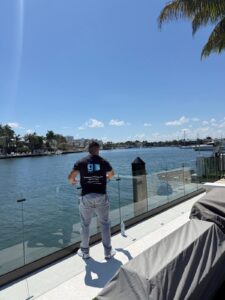
On a waterfront property, the railing is in every photograph. It frames the view from the terrace, outlines the dock in the aerial shot, and sits between the owner and the water every single day. Luxury waterfront homes on the ocean, the bay, and the Intracoastal treat the railing as architecture rather than hardware, and the difference shows. Here are the details that separate a good glass railing from the ones on the most beautiful waterfront properties in Miami-Dade and Broward.
The Goal Is to Disappear
Everything about a luxury waterfront railing serves one purpose: an uninterrupted view. That begins with glass selection. Low-iron glass removes the green tint that standard glass shows at the edges and across large panels, so the water reads as its true color. Panel sizes are pushed as large as engineering allows to minimize joints, and where joints exist, they are polished and butted tight rather than framed. The best installations have no top rail at all where the engineering supports it, so the eye runs straight from the terrace to the horizon.
Hardware That Earns Its Place
Where hardware must exist, it should be deliberate. Base-shoe systems recessed into the deck hide the glass fixing entirely; the panels appear to rise from the floor. Where spigots or standoffs are used, they are specified in polished or brushed marine-grade stainless, or in matte black or bronze finishes that coordinate with window frames and door hardware. Consistency is the tell: the railing finish should match the sliding doors, the exterior lighting, and the dock cleats.
Materials Built for the Front Row
Waterfront exposure is the most demanding environment glass railings face: salt spray, UV, wind, and daily humidity. Luxury projects do not compromise here. Laminated glass holds panels in place even if damaged and is standard at height. Marine-grade stainless resists the tea-staining that lesser grades show within a season. Protective coatings on the glass turn salt film into a rinse-and-squeegee job rather than a constant battle. These choices cost more once and look right for decades.
Docks, Seawalls, and Pool Edges
The railing conversation extends past the terrace. Dock railings and seawall guards in glass keep the waterline visible and give a property a continuous design language from house to water. Pool decks on waterfront lots often use glass as the pool barrier so the pool and the bay read as one sheet of water from the house. Each of these has its own engineering, including code barrier requirements for pools and marine conditions at the dock, and the best results come from designing them together rather than piecemeal.
Windscreens: Making the Terrace Usable
Oceanfront and bayfront terraces take the prevailing breeze head-on. Taller glass panels along the exposed edge, designed as windscreens, calm the air at seated height without closing in the space. On luxury projects, windscreens are planned with the railing so the glass lines are continuous and the hardware matches. The payoff is a terrace that gets used at sunset instead of admired from indoors.
Lighting the Glass
A detail reserved for the most considered projects: LED strips concealed in the base shoe or handrail that wash the glass at night. The railing becomes a subtle line of light along the water’s edge, and the view does not disappear when the sun goes down.
Engineering Is the Foundation
None of this works without engineering. Waterfront railings sit in the High-Velocity Hurricane Zone and are designed for real wind pressures, with permits and inspections to match. The luxury version of a railing is not thinner or lighter; it is engineered so precisely that the structure is invisible.
Designing a Waterfront Project?
IG Glass designs, engineers, and installs frameless glass railings, windscreens, and dock and pool systems for waterfront homes across Miami-Dade and Broward. Contact us or call 786-312-8778 to talk through the view you want to keep.