Interior doors are an afterthought in most renovations, and that is a missed opportunity. Replacing a solid door with glass, or adding a glass door where a wall once stood, changes how light moves through a home and how connected its rooms feel. From a home office that stays bright but quiet to a wine room that becomes a feature, interior glass doors are one of the most effective design upgrades per square foot. Here is a guide to the main types and where each belongs.
Pivot Doors
A pivot door rotates on a top and bottom pivot set in from the edge rather than on side hinges, allowing oversized, frameless glass panels that swing with surprising ease. They make statement entries to offices, studies, and primary suites, and they handle tall openings beautifully. Pivot hardware is engineered for the panel weight; this is a system to specify properly rather than improvise.
French and Hinged Glass Doors
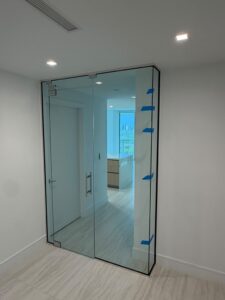
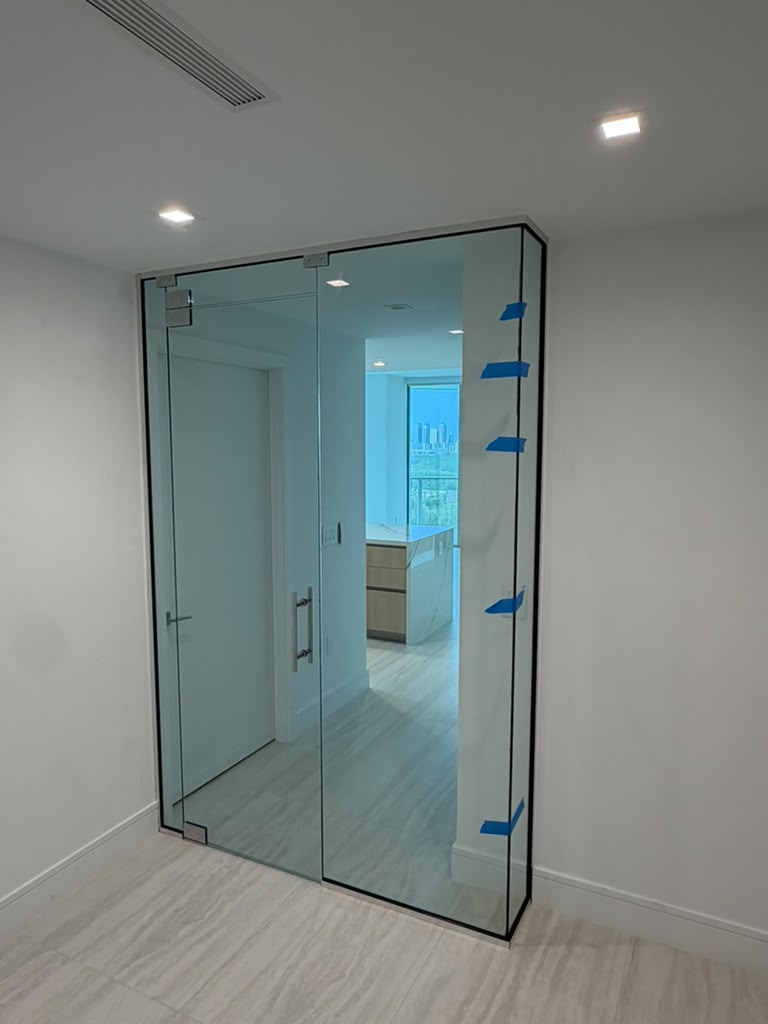
Paired glass doors in slim metal or wood frames remain the classic for dividing living and dining spaces, sunrooms, and home offices. Modern versions use narrow black or bronze steel-look frames with large clear panes, the style often called industrial or Crittall-inspired, which has become a signature of contemporary South Florida interiors. Frameless hinged glass doors with minimal patch fittings deliver the same openness with no frame at all.
Pocket and Sliding Glass Doors
Where swing space is tight, sliding systems win. Pocket doors disappear into the wall; barn-style top-hung sliders ride on an exposed track and have become a design feature in their own right; and multi-panel sliding walls open an entire room to another. Glass versions of each keep light flowing even when closed. Pocket doors require the wall cavity to be planned during construction; barn-style sliders retrofit easily.
Glass Choices: Clear, Frosted, Reeded, Smoked
The glass itself sets the mood. Clear glass connects spaces fully. Frosted or satin-etched glass passes light while providing privacy, the choice for bathrooms, closets, and offices facing busy rooms. Reeded and fluted glass, with their vertical texture, have surged in popularity for pantries, bars, and powder rooms. Smoked gray and bronze tints add drama in media rooms and wine cellars. All interior door glass is tempered safety glass, and laminated glass adds sound control where quiet matters.
Where Glass Doors Earn Their Place
Home offices (light in, noise out, with laminated glass); pantries and wine rooms (display the contents); primary suite entries and closets (a hotel feel); sunrooms and lanais (connection to the outdoors); and dark hallways or interior rooms that borrow light from adjacent spaces. In condos, glass doors stretch limited daylight across the whole unit.
Planning and Installation
Openings must be structurally sound and square; pivot and large sliding systems have hardware weight limits and need solid framing. Glass is fabricated after precise field measurement and hardware selection. Most installations complete within a day once the glass arrives, with lead times driven by the glass fabrication and any specialty hardware.
Opening Up Your Home?
IG Glass designs and installs interior glass doors, pivot, hinged, pocket, and sliding, across Miami-Dade and Broward, alongside partitions and custom glass for the rest of the home. Contact us or call 786-312-8778.