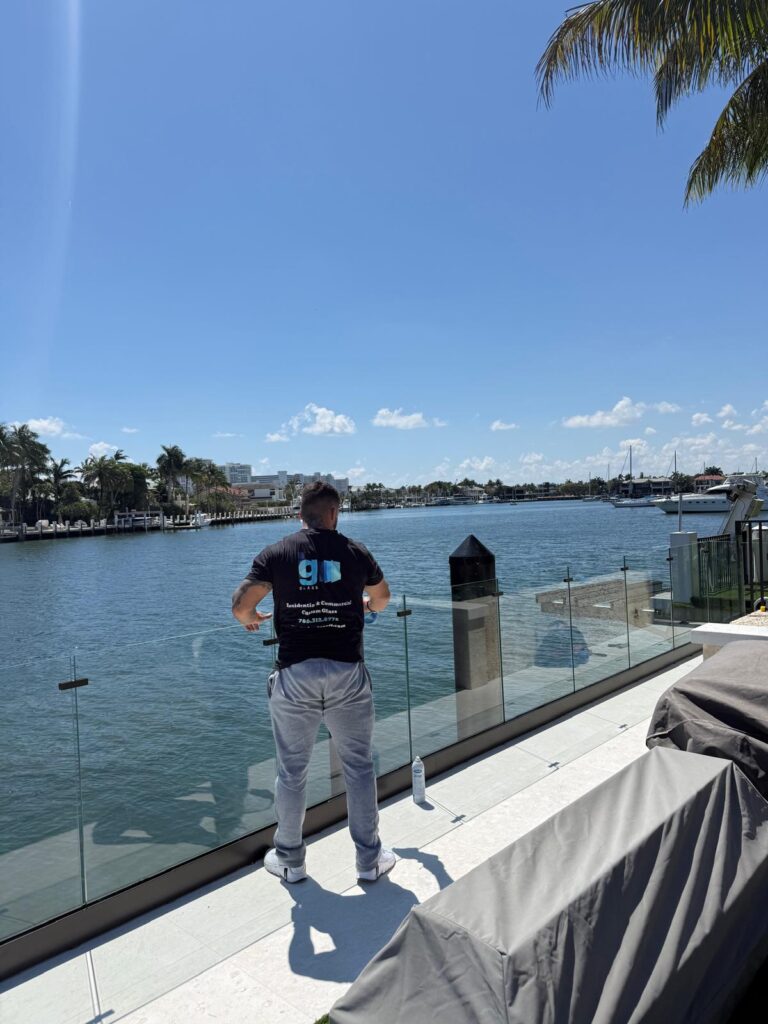
Ask anyone with an east-facing balcony in Sunny Isles or a bayfront terrace in Miami: the view is spectacular and the wind is relentless. Napkins fly, candles die, conversations compete with the breeze, and the outdoor furniture lives its life pushed against the wall. Glass wind screens solve exactly this — transparent barriers that tame the wind without touching the view. Here is how they work and where they make the biggest difference.
What a Wind Screen Is (and Isn’t)
A wind screen is a glass panel system — typically taller than a standard guard railing — designed to block or redirect wind across a terrace, balcony, pool deck, or outdoor dining area. Some projects extend the railing itself upward in taller glass; others add freestanding or wall-returned panels around a seating zone. Unlike an enclosure, a wind screen keeps the space open-air: no roof, no screens, just calmer air on your side of the glass.
Where They Earn Their Keep
The classic candidates: oceanfront and Intracoastal balconies where prevailing easterlies make evenings unusable; rooftop terraces, where wind at height is the defining condition; pool decks, where wind chill shortens the season even in Florida; and restaurant patios, where comfortable guests linger longer. In condo buildings, wind screens frequently ride along with balcony railing replacement projects — same engineering conversation, same mobilization, better outcome.
The Engineering Part (Especially at Height)
Taller glass catches more wind load — which is precisely the point — so wind screens are engineered elements, not accessories. Panel thickness, laminated glass specification, base fixing, and anchorage are calculated for your exposure, and in the High-Velocity Hurricane Zone that covers Miami-Dade and Broward, product approvals and permits apply just as they do for railings. On balconies, association approval typically comes first; on rooftops, the anchoring detail is coordinated with waterproofing. This is the same discipline behind our rooftop railing work, extended upward.
Design Choices
Low-iron glass keeps the panorama truly colorless — worth it when the view is the whole point. Frameless systems with minimal hardware disappear best; channel-set bases give the cleanest line. Height is the key decision: enough to shelter seated guests without walling off the sky — an on-site mockup conversation more than a catalog number. And for salt-air exposure, marine-grade hardware plus a protective coating keeps maintenance to a rinse and squeegee.
What About Privacy?
Wind screens can moonlight as privacy panels: frosted or gradient-frosted glass between neighboring balconies blocks sightlines while it blocks wind — a popular combination on side returns, with clear glass kept on the view side.
Make Your Outdoor Space Actually Usable
IG Glass designs, engineers, and installs glass wind screens across Miami-Dade and Broward — balconies, rooftops, pool decks, and patios, coordinated with railing projects where it saves money. Contact us or call 786-312-8778 for a consultation.