Glass problems arrive in many forms: a shower door gone permanently cloudy, a chipped railing panel, a scratch across a tabletop, a fogged window that no cleaner touches. The natural first question is always the same, can this be fixed, or does it need to be replaced? The honest answer depends entirely on what kind of damage you have and what kind of glass it lives in. Here is a straight guide from people who look at damaged glass every week.
Cloudy Shower Glass: Usually Buildup, Sometimes Damage
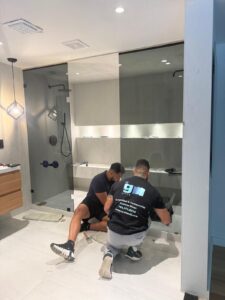
Most “foggy” shower doors are wearing years of mineral deposits from South Florida’s hard water. Early-stage buildup often responds to professional-grade restoration, far beyond what household cleaners achieve, and once restored, a protective coating keeps it from returning. The bad news: hard water left long enough chemically etches the surface, and etched glass is permanently damaged; no polish brings back true clarity. The test is simple: if the haze remains after aggressive proper cleaning of a small area, the surface is etched and replacement is the honest recommendation. Replacing panels within an existing frameless enclosure is routine, often you replace the door alone.
Chips: Location Decides Everything
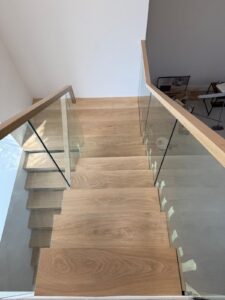
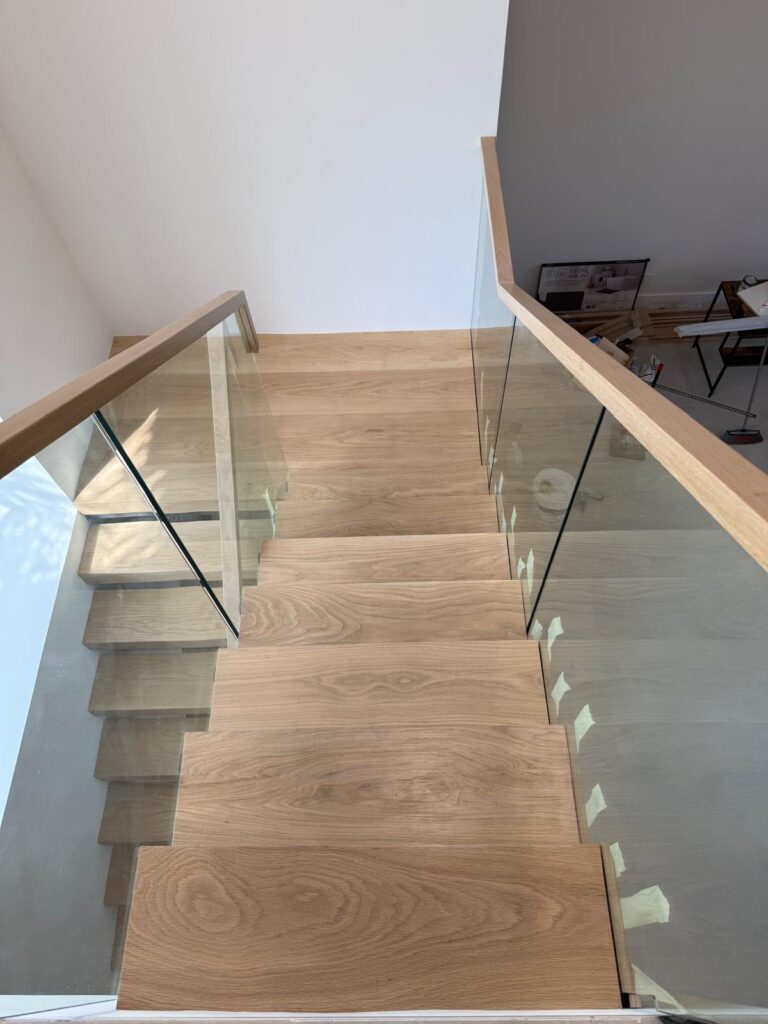
A small chip on the edge of an interior mirror or shelf can sometimes be seamed or polished. But chips in tempered safety glass, shower doors, railings, tabletops, are a different story: tempering stores enormous stress in the glass, and edge damage compromises the panel’s integrity. Chipped tempered panels, especially in railings where safety is the whole point, should be replaced, not patched. Laminated railing glass with damage to one ply also warrants professional evaluation; the interlayer holds it together, which is its job, but it is telling you something.
Scratches: Depth Is the Dividing Line
The fingernail test is real: if a scratch does not catch your fingernail, professional polishing can often minimize or remove it. Deeper scratches can technically be ground out, but removing material creates optical distortion, a wavy lens effect, that is frequently worse than the scratch, especially on large clear panels you look through. Fine scratches on mirrors and furniture glass are the best candidates; deep scratches on shower doors and railing panels usually point to replacement.
Fogged Double-Pane Windows: A Seal Failure
Condensation between the panes of an insulated window means the perimeter seal has failed and moisture is inside the unit. No cleaning reaches it, and no repair restores the seal. The fix is replacing the insulated glass unit, often without replacing the whole window frame, a common and economical repair.
Hardware Problems Masquerading as Glass Problems
A dragging shower door, a rattling railing panel, a misaligned gate, many “glass” complaints are actually hinges, clamps, seals, and gaskets that have worn. These are genuinely repairable: hardware swaps, new sweeps and seals, and realignment restore smooth operation at a fraction of replacement cost. If your glass is fine but the experience is not, start with the hardware.
The Honest Rule of Thumb
Surface issues on annealed glass and mirrors: often repairable. Structural damage to tempered safety glass: replace. Etched hard-water damage: replace, then protect the new glass with a coating so it never happens again. When in doubt, a photo is usually enough for us to tell you which side of the line you are on.
Have Damaged Glass?
IG Glass replaces shower panels, railing glass, mirrors, and custom glass across Miami-Dade and Broward, and we will tell you honestly when repair is the better answer. Contact us or call 786-312-8778.