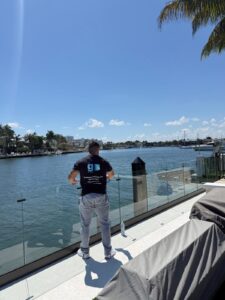
Glass railings are one of the best upgrades a coastal home can get: unobstructed water views, a clean modern look, and real protection for balconies, terraces, and pool decks. But if you live near the water in Miami, Fort Lauderdale, or anywhere along the South Florida coast, your railing system lives in one of the harshest environments in the country. Salt-laden air works on metal hardware every single day, and over time it can turn a beautiful railing into a maintenance headache.
The good news: with the right materials and a simple care routine, a glass railing system can look brand new for decades, even directly on the oceanfront. Here is what salt air actually does, and how to stay ahead of it.
Why Salt Air Is So Hard on Railings
Salt spray does not need direct contact with waves to cause damage. Airborne salt particles travel well inland, settle on surfaces, and attract moisture. That salty film is corrosive to metals, and in South Florida it never really gets a break: high humidity keeps hardware damp, summer heat accelerates chemical reactions, and afternoon storms drive salt deeper into crevices around clamps, standoffs, and base channels.
The glass itself is essentially immune to salt corrosion. What suffers is everything holding the glass: posts, base shoes, clamps, handrails, and fasteners. That is why material selection matters more on the coast than anywhere else.
Choose Coastal-Grade Materials from Day One
Marine-grade stainless steel (316)
Not all stainless steel is equal. Standard 304 stainless performs well inland, but within a mile or two of the ocean it can develop “tea staining,” the brown surface discoloration common on beachfront properties. Marine-grade 316 stainless contains molybdenum, which dramatically improves resistance to chloride corrosion. For oceanfront and Intracoastal properties, 316 hardware is worth every penny.
Anodized or powder-coated aluminum
Aluminum base shoes and posts with a quality anodized or powder-coated finish hold up extremely well in salt environments and are lighter than steel. The key is protecting the finish: scratches that expose bare aluminum become starting points for oxidation.
Laminated and tempered safety glass
Florida requires safety glazing for railings, and in South Florida many applications call for laminated glass. Beyond code compliance, laminated glass shrugs off salt air completely; a good rinse is all it ever needs. If you are comparing glass types, our guide to tempered and laminated glass covers the differences in detail.
The Simple Maintenance Routine That Prevents 90% of Problems
1. Rinse with fresh water regularly
The single most effective thing a coastal homeowner can do is rinse railings with fresh water. Oceanfront properties benefit from a quick hose-down every one to two weeks; homes farther from the water can stretch to monthly. Rinsing removes the salt film before it has time to work on the metal.
2. Wash hardware with mild soap every month or two
A bucket of warm water with a few drops of dish soap and a soft cloth is all it takes. Pay attention to the underside of handrails, the joints around clamps, and the base channel where salt and debris collect. Avoid abrasive pads, steel wool, and chlorine-based cleaners, which can damage stainless surfaces and finishes.
3. Clean the glass with non-abrasive products
Standard glass cleaner or a vinegar-and-water mix keeps panels clear. For homes with sprinklers drawing from wells, watch for hard water spotting and treat it early. A protective hydrophobic coating on the glass makes water and salt sheet off instead of drying in place, cutting your cleaning time significantly.
4. Inspect fasteners and seals once or twice a year
Twice a year, take ten minutes to look closely at your railing system. You are checking for any brown staining on stainless hardware, chalking or bubbling on coated aluminum, loose fasteners, and cracked sealant around base shoes. Caught early, tea staining polishes out easily with a stainless cleaner; ignored for years, corrosion can compromise fasteners and become a safety issue.
Warning Signs That Deserve Professional Attention
Call a professional if you notice wobble or movement in the railing, rust streaks running from fastener points, cracked or delaminating glass edges, or corrosion around the base shoe where the railing anchors to concrete. Balcony anchoring points are structural: moisture that reaches embedded anchors can also affect the concrete around them, which is a bigger problem than the railing itself.
Thinking About Replacing an Aging Coastal Railing?
If your current railing is showing its age, a modern frameless glass system with marine-grade hardware is designed specifically for South Florida conditions. IG Glass designs, fabricates, and installs custom glass railings across Miami-Dade and Broward, from oceanfront condos in Sunny Isles Beach to waterfront homes in Fort Lauderdale, using materials selected for coastal durability.
Ready to upgrade or need help assessing an existing railing? Contact IG Glass or call 786-312-8778 for a free consultation.